Summary
For decades, online commerce was built around one core assumption: humans browse, compare, and make purchasing decisions manually.
Websites were designed for human navigation. Ads were optimized for human clicks. SEO targeted human search behavior. Product pages focused heavily on persuasion, conversion psychology, and visual trust signals.
That system is beginning to change.
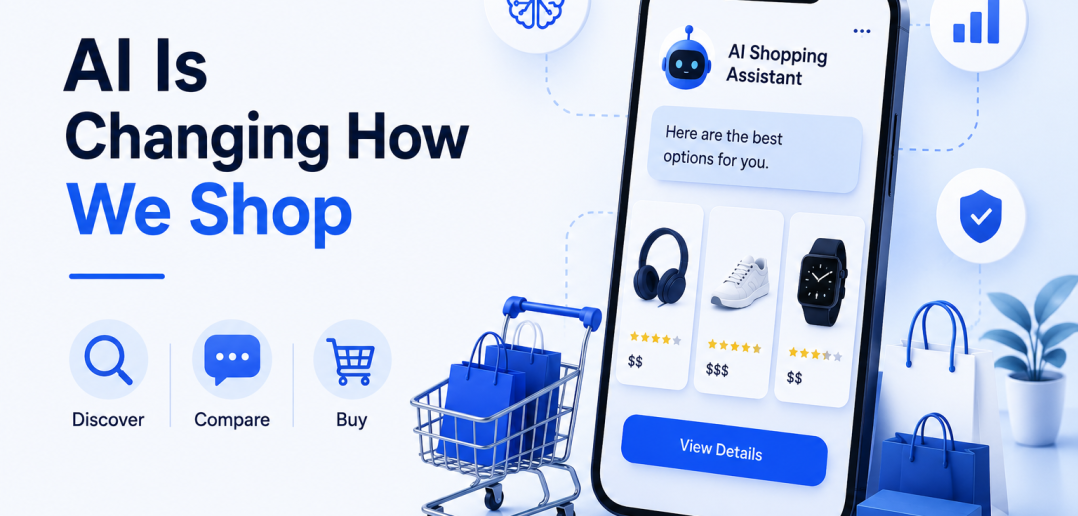
In 2026, AI is becoming increasingly involved in how consumers discover, evaluate, and select products online. People are now using AI tools to summarize reviews, compare products, recommend alternatives, explain trade-offs, and narrow choices far faster than traditional browsing allows.
At first, these tools appear to be convenience features.
But the shift is deeper.
Commerce itself is gradually moving from human-led navigation toward AI-assisted decision-making. And that transition could fundamentally reshape digital marketing, e-commerce strategy, search visibility, and online advertising over the next decade.
The businesses that adapt fastest may not simply be the ones spending the most on ads. They may be the ones building the clearest, most trusted, and most understandable signals for AI systems to interpret.
Why AI Shopping Matters More Than Ever
Modern digital commerce has become increasingly overwhelming for consumers.
Most buyers now face endless product listings, repetitive marketplace pages, conflicting reviews, and too many similar options. In many industries, the challenge is no longer access to information. It is filtering information efficiently.
AI dramatically reduces that friction.
Instead of opening multiple tabs and researching products manually for hours, users can increasingly ask conversational questions like:
- “What is the best CRM for contractors?”
- “Which laptop has the best battery life?”
- “What skincare products work best for sensitive skin?”
AI systems can process and summarize enormous amounts of information almost instantly.
That changes how buying decisions happen.
And importantly, it changes how products get discovered in the first place.
The Internet Was Built Around Human Attention
Traditional digital marketing evolved around influencing human behavior directly.
Businesses competed through:
- persuasive copywriting,
- stronger branding,
- visual merchandising,
- paid advertising,
- SEO rankings,
- and conversion optimization.
Success depended heavily on attracting attention and convincing users to click, browse, and purchase manually.
But AI-assisted shopping changes that structure.
Machines evaluate products differently than humans do.
Humans often respond emotionally to:
- branding,
- design,
- storytelling,
- and visual presentation.
AI systems prioritize:
- structured information,
- semantic clarity,
- review quality,
- consistency,
- trust indicators,
- and verifiable product data.
That creates an entirely different competitive environment.
Search Behavior Is Quietly Changing
One of the biggest shifts happening right now is the move from traditional search behavior toward conversational discovery.
Historically, users typed fragmented keywords into search engines and manually explored multiple results pages.
Now users increasingly ask complete questions conversationally and expect AI systems to provide summarized recommendations instantly.
That changes the role of search itself.
Businesses may no longer compete only for rankings and clicks.
Increasingly, they may compete for recommendation placement inside AI-generated answers.
This is one reason many marketers believe SEO could evolve significantly over the next few years.
The future of discoverability may involve optimizing not only for search engines, but also for AI interpretation systems.
The Rise of Machine Visibility
Historically, marketers focused heavily on:
- search visibility,
- social reach,
- and advertising impressions.
Now another layer is emerging:
machine visibility.
In simple terms, businesses must increasingly ask:
Can AI systems understand, trust, compare, and recommend our products effectively?
That question changes how digital commerce operates.
Businesses with:
- cleaner product information,
- stronger review ecosystems,
- better technical SEO,
- clearer positioning,
- and more structured data
may gain disproportionate advantages in AI-assisted shopping environments.
This could impact nearly every category, including:
- local services,
- SaaS products,
- e-commerce brands,
- professional services,
- healthcare businesses,
- and subscription products.
Why Branding May Become Even More Important
Some people assume AI-driven commerce will reduce the importance of branding.
The opposite may happen.
As AI simplifies comparison shopping, interchangeable products may become easier to replace. That increases the importance of emotional trust, familiarity, reputation, and perceived authority.
Even when AI narrows options efficiently, humans still care deeply about confidence.
People want to feel reassured that they are making the right decision.
Strong brands help create that reassurance.
This means branding may become one of the strongest defenses against commoditization in AI-driven markets.
Why Small Businesses Should Pay Attention
Many small businesses assume AI shopping will mainly affect large technology companies or major marketplaces.
That is unlikely.
AI-driven recommendation systems could influence how users discover:
- local service providers,
- agencies,
- law firms,
- healthcare providers,
- contractors,
- and small e-commerce businesses.
For example, AI systems may eventually summarize:
- review quality,
- pricing reputation,
- expertise signals,
- customer sentiment,
- and service differentiation
before users ever visit a website directly.
That changes how visibility itself works.
The future advantage may not simply come from:
- larger advertising budgets,
- more content production,
- or aggressive keyword targeting.
It may come from building stronger trust ecosystems and clearer positioning.
AI Is Changing What Marketing Optimization Means
Traditional digital marketing focused heavily on maximizing:
- clicks,
- impressions,
- traffic,
- and conversion rates.
AI-assisted commerce may shift optimization toward:
- trust quality,
- information clarity,
- semantic understanding,
- review authenticity,
- and recommendation relevance.
This is a deeper transformation than many businesses currently realize.
Because AI systems are not simply another traffic channel.
They may become intermediaries between businesses and buyers themselves.
What Smart Businesses Are Doing Instead
Forward-looking companies are already improving:
- structured product data,
- semantic SEO,
- review systems,
- technical clarity,
- brand differentiation,
- and trust signals.
Instead of focusing only on:
“How do we attract more visitors?”
They are increasingly asking:
“How do we become the most trusted recommendation?”
That is a fundamentally different strategic question.
The Hidden Risk of AI-Led Commerce
There is also a major risk businesses should understand.
As AI makes comparison shopping easier, many industries may experience stronger commoditization pressure.
Businesses relying primarily on:
- low pricing,
- generic messaging,
- or interchangeable positioning
could struggle more as AI systems instantly surface competing alternatives.
This creates greater pressure around:
- differentiation,
- trust,
- authority,
- and customer experience.
In many ways, AI may expose weak positioning faster than traditional search ever did.
How Businesses Can Prepare
The companies likely to perform best in AI-assisted commerce environments are those investing in:
- clearer product information,
- stronger reviews,
- better customer trust,
- cleaner technical SEO,
- and more distinct positioning.
AI may automate parts of shopping behavior.
But trust will still heavily influence final decisions.
That is unlikely to change.
Key Takeaways
AI-assisted shopping is no longer a future prediction.
It is already beginning to reshape:
- search behavior,
- product discovery,
- recommendation systems,
- and purchasing decisions.
The businesses that adapt early may gain significant advantages as commerce becomes increasingly AI-mediated.
The future of online shopping may not belong only to the brands people trust most.
It may belong to the brands algorithms understand and trust first.