Summary
For years, FAQ schema became one of the most popular SEO tactics for small businesses.
Businesses added FAQ sections to service pages hoping to earn larger search listings, improve visibility, and increase click-through rates. For a while, the strategy worked extremely well.
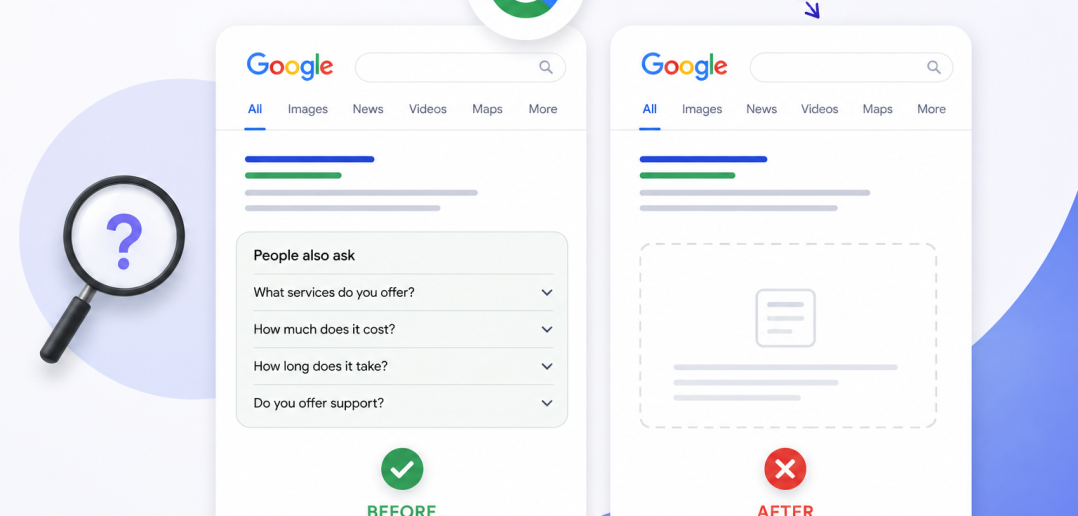
But Google has steadily reduced FAQ rich result visibility, and many businesses are now noticing those enhanced search results disappearing.
The larger shift is important.
This is not simply about one SERP feature fading away. It reflects how Google Search itself is evolving. Search engines are becoming more selective about which results receive extra visibility, while AI-generated answers and broader trust signals are becoming more important.
For small businesses, this changes how SEO should be approached moving forward.
Key Takeaways
FAQ schema still helps organize content and improve user experience, but it is no longer the major visibility advantage it once was. SEO is increasingly shifting away from isolated technical tactics and toward trust, expertise, authority, and genuinely useful content experiences.
FAQ Rich Results Once Became an SEO Shortcut
When FAQ schema first became popular, businesses across nearly every industry implemented it aggressively.
The appeal was obvious.
Expanded search listings allowed businesses to occupy more space in Google results, stand out visually, and potentially improve click-through rates without dramatically improving rankings.
Agencies quickly added FAQ sections to:
service pages,
location pages,
blogs,
and landing pages.
For a period of time, it delivered strong results.
But as adoption increased, the tactic became overused.
Many FAQ sections eventually looked repetitive, generic, and created primarily for search engines rather than users.
That changed how Google viewed them.
Why Google Is Reducing FAQ Visibility
Google’s search ecosystem is changing rapidly.
Over the past few years, the company has placed greater focus on simplifying search results and improving overall search quality. As AI-generated content expanded, thousands of websites began mass-producing FAQ sections automatically.
The result was predictable:
search results became cluttered with repetitive question blocks that often added little original value.
Reducing FAQ rich results helps Google create cleaner search experiences while prioritizing content that demonstrates stronger expertise and usefulness.
This also aligns with Google’s broader push toward AI-powered search summaries and more selective SERP enhancements.
The Bigger SEO Shift Happening Underneath
The decline of FAQ rich snippets reflects a much larger transition happening inside SEO.
For years, many optimization strategies focused heavily on tactical adjustments:
schema markup,
keyword placement,
metadata optimization,
and SERP feature targeting.
Those technical elements still matter.
But search engines are increasingly evaluating websites more holistically.
Today, Google places growing importance on:
content usefulness,
authority,
user experience,
engagement quality,
and trust.
In other words, SEO is becoming less about isolated tricks and more about overall credibility.
That is a major strategic shift for businesses that relied heavily on technical shortcuts alone.
Small Businesses May Feel the Change Quickly
For many small businesses, FAQ rich results offered an accessible way to compete with larger brands.
Even businesses without strong domain authority could gain additional visibility through enhanced search listings.
As those enhancements disappear, some companies may notice:
lower click-through rates,
less visual prominence,
or slower organic growth on pages that previously relied on FAQ expansion.
But this does not mean SEO is becoming less important.
It means the sources of competitive advantage are changing.
What Businesses Should Focus On Instead
The strongest SEO strategies today are becoming more customer-focused.
Instead of optimizing primarily for search features, businesses increasingly need to focus on creating stronger overall content experiences.
That includes:
clear explanations,
original insights,
localized expertise,
high-quality landing pages,
and trustworthy brand signals.
Search engines increasingly reward businesses that genuinely help users make decisions and solve problems.
That creates stronger long-term visibility than FAQ schema alone ever could.
FAQ Content Still Has Value
Importantly, FAQ sections themselves are not useless.
Well-written FAQs can still improve:
clarity,
user experience,
conversion rates,
and customer confidence.
They help answer objections and reduce hesitation before a customer contacts a business.
The difference is that businesses should stop viewing FAQ schema as a shortcut for SEO growth.
The focus should shift from:
“How do we get a larger search result?”
to:
“How do we create a better experience for users?”
That is a far more sustainable strategy long term.
Search Is Becoming More Trust-Driven
Another major change happening beneath SEO is the growing importance of trust.
As AI-generated summaries increasingly answer questions directly inside search results, users become more selective about which businesses they engage with.
Visibility alone is no longer enough.
Businesses increasingly need to build:
authority,
credibility,
reviews,
brand familiarity,
and consistent expertise across multiple channels.
SEO is becoming more connected to overall reputation and brand perception.
Final Thought
Google FAQ rich results are fading, but the bigger story is the evolution of search itself.
SEO is moving away from shortcut-style optimization and toward broader evaluations of usefulness, expertise, trust, and authority.
For small businesses, long-term growth will likely depend less on technical SERP tricks and more on becoming the business users trust most when they finally click.