
Summary
Short-form video has become the most powerful content format on the internet. Platforms like LinkedIn, Instagram, YouTube Shorts, and TikTok prioritize video content that captures attention within the first few seconds.
For many small businesses, however, creating high-quality video content consistently has always been difficult. It requires equipment, editing skills, and time.
AI has changed that equation.
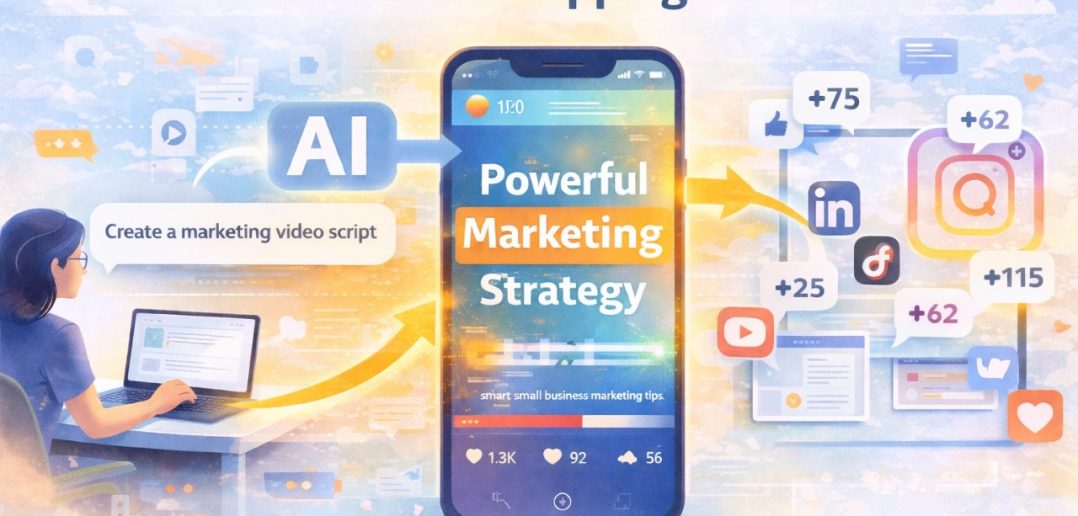
Today, marketers can plan, script, produce, and publish compelling videos in minutes using AI tools. The real challenge is not creating videos. The challenge is creating scroll-stopping videos that people actually watch.
This guide explains how marketers and small businesses can use AI to produce video content that grabs attention, communicates a message quickly, and drives engagement.
Why Scroll-Stopping Videos Matter More Than Ever
Social feeds move fast.
Users scroll through hundreds of posts in a single session. If a piece of content fails to capture attention within the first two seconds, it disappears instantly.
Video content performs better than almost every other format because it naturally interrupts scrolling behavior.
Research consistently shows that:
• Video posts generate higher engagement than text or static images
• Social platforms prioritize video in their algorithms
• Video increases time spent on content, which signals quality to the platform
For marketers, this creates a powerful opportunity. A single well-designed video can reach thousands of people organically.
But only if it stops the scroll.
What Makes a Video “Scroll-Stopping”
Before talking about AI tools, it is important to understand the elements that make a video work.
Scroll-stopping videos usually combine four ingredients.
1. A Strong Opening Hook
The first three seconds determine whether someone continues watching.
The hook can be:
• A surprising statement
• A bold claim
• A question that sparks curiosity
• A visual pattern interruption
Example:
“90% of small business videos fail before the first five seconds.”
This immediately creates curiosity.
2. Fast Visual Movement
Movement naturally captures attention.
Videos that include transitions, animated graphics, or dynamic text overlays perform significantly better than static visuals.
AI tools make this easier by automatically generating motion graphics and scene transitions.
3. Clear Message
The best videos communicate one idea, not ten.
Overloaded videos confuse viewers and reduce retention.
Scroll-stopping content focuses on a single insight, tip, or story.
4. Visual Simplicity
Complex visuals slow comprehension.
The most effective marketing videos use:
• minimal text
• clear visuals
• simple graphics
The viewer should understand the message instantly.
How AI Is Transforming Video Creation
Until recently, video production required a team.
Now AI tools allow marketers to create professional videos without editing experience.
AI tools help with:
• Script writing
• Voiceovers
• Video generation
• Editing
• Subtitles
• Animations
This dramatically reduces production time.
A video that once took days can now be created in minutes.
The AI Video Creation Workflow
Creating effective marketing videos with AI follows a simple process.
Step 1: Start With the Idea
Great videos start with a strong idea.
For marketing content, useful video topics include:
• quick marketing tips
• short tutorials
• industry insights
• case study highlights
• myths and misconceptions
AI tools like ChatGPT can help brainstorm ideas quickly.
Example prompt:
“Give me 10 short marketing video ideas for small businesses.”
Step 2: Write a Short Script
Scroll-stopping videos are short.
Most high-performing marketing videos are between 20 and 45 seconds.
The script should include:
- Hook
- Key insight
- Supporting explanation
- Simple takeaway
AI tools can generate scripts quickly that you can refine.
Step 3: Generate the Video Using AI
Several AI tools can transform scripts into video automatically.
Popular tools include:
• Synthesia
• Pictory
• Runway
• Descript
• HeyGen
These tools can create:
• AI avatars
• animated visuals
• voiceovers
• captions
The result is a polished video without complex editing.
Step 4: Add Motion and Captions
Captions significantly increase video engagement.
Many people watch videos without sound.
AI video platforms automatically generate captions and dynamic text overlays.
This improves accessibility and retention.
Step 5: Optimize for Social Platforms
Different platforms favor different formats.
Recommended formats:
• LinkedIn: professional insights and short educational videos
• Instagram Reels: quick tips and visual storytelling
• TikTok: engaging, fast-paced content
• YouTube Shorts: informative micro-content
AI tools can automatically resize videos for different platforms.
A Simple Formula for Scroll-Stopping AI Videos
Marketers can use a simple structure that consistently works.
Hook → Insight → Example → Takeaway
Example structure:
Hook
“Small businesses waste thousands on ads that never convert.”
Insight
“The real problem is weak landing pages.”
Example
“Here are three things high-converting pages always include.”
Takeaway
“If your landing page does not answer these three questions, your ads will fail.”
This formula works across nearly every marketing topic.
Common Mistakes Marketers Make With AI Videos
AI tools make video creation easier, but they can also create poor content if used incorrectly.
Overproducing Content
Quantity should never replace quality.
Publishing dozens of generic videos rarely works.
Focus on fewer videos with stronger insights.
Ignoring the Hook
Many videos begin too slowly.
If the opening is weak, viewers scroll away instantly.
The hook must appear in the first seconds.
Overusing AI Avatars
AI avatars can be useful, but overusing them can reduce authenticity.
Mix AI-generated content with human storytelling and real examples.
Forgetting the Audience
The best marketing videos speak directly to a specific audience.
A video for small business owners should not sound like a video for enterprise marketers.
How Small Businesses Can Use AI Videos Strategically
AI videos can support several marketing objectives.
Educational Content
Explain marketing concepts in simple ways.
Product Demonstrations
Show how a product works quickly.
Customer Insights
Share common mistakes or lessons from real clients.
Case Studies
Highlight real results from campaigns.
Thought Leadership
Share insights about trends in marketing or technology.
These videos build credibility while increasing reach.
Key Takeaways
AI video creation is no longer a future trend. It is already reshaping how marketing content is produced.
Small businesses that learn to combine AI efficiency with human creativity can produce video content consistently without large budgets.
Remember these principles:
• Strong hooks drive attention
• Short videos perform better
• Simple visuals improve comprehension
• AI tools accelerate production
• Clear messaging drives engagement
The brands that win on social platforms are not the ones producing the most content.
They are the ones producing content people stop scrolling for.