
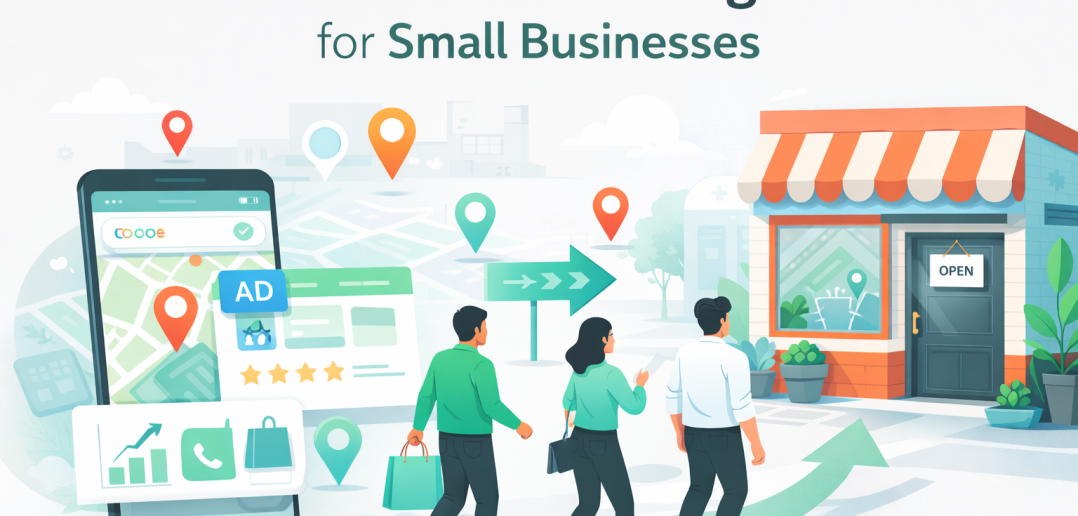
Small businesses often assume advertising means spending thousands on digital campaigns.
But local advertising works differently.
It focuses on visibility where your customers already are: in their neighborhoods, on Google Maps, on social platforms, and in their local communities.
A well-planned local advertising strategy can increase foot traffic, build brand familiarity, and drive consistent walk-in customers.
The challenge is that many businesses run ads without understanding how local discovery actually works today.
Customers rarely search broadly anymore.
They search locally.
“Coffee shop near me.”
“Best auto repair in San Jose.”
“Dentist open today.”
If your business appears in those moments, you win.
This guide breaks down how local advertising works for small businesses and the practical tactics that increase foot traffic.
Why Local Advertising Matters More Than Ever
Local advertising has become one of the most effective growth channels for small businesses.
Consumers increasingly rely on location-based search and recommendations before visiting a business.
Several trends are shaping this shift:
• Mobile search dominates local discovery
• Google Maps has become a primary business directory
• Reviews influence purchasing decisions
• Social media drives local awareness
When a customer searches for a service nearby, the businesses that appear first are often the ones that receive the visit.
This makes local visibility a major advantage.
For many small businesses, local advertising is not about reach.
It is about relevance.
Showing up at the exact moment someone nearby needs what you offer.
Key Takeaways
• Local advertising focuses on geographic relevance rather than mass reach
• Google Maps and local search heavily influence customer visits
• Reviews and reputation directly impact local advertising performance
• Social media and community platforms increase local awareness
• Consistency across listings and ads improves visibility
1. Optimize Your Google Business Profile First
Before spending money on ads, small businesses should optimize their Google Business Profile.
This profile often appears before a company’s website in local searches.
An optimized profile improves your chances of appearing in the local map pack, which drives a large percentage of local traffic.
Important elements include:
• Accurate business information
• Updated photos
• Business categories
• Customer reviews
• Regular posts and updates
Businesses with well-maintained profiles tend to receive more calls, direction requests, and visits.
Local advertising works best when your Google presence is strong.
2. Use Google Local Search Ads
Google Ads allows businesses to run campaigns specifically designed for local search visibility.
These ads appear when someone searches for nearby services.
For example:
“plumber near me”
“pizza delivery nearby”
“best chiropractor in Dallas”
These searches have extremely high purchase intent.
Small businesses can target:
• Specific cities
• Zip codes
• Radius around a business location
Local search ads help businesses appear above organic listings, increasing visibility and clicks.
3. Invest in Map-Based Advertising
Google Maps advertising is one of the most overlooked local marketing channels.
When users browse the map looking for nearby businesses, sponsored listings appear directly within the results.
This increases visibility for businesses competing in crowded markets.
Map ads are particularly effective for industries such as:
• Restaurants
• Auto repair
• Medical clinics
• Home services
• Retail stores
When combined with strong reviews, map ads significantly increase foot traffic.
4. Leverage Social Media for Local Awareness
Social platforms play a major role in local advertising today.
Platforms like Instagram, Facebook, and TikTok allow businesses to target audiences based on location.
Local campaigns can promote:
• limited-time offers
• local events
• seasonal promotions
• new product launches
Social ads work well because they combine visual storytelling with geographic targeting.
A restaurant promoting a lunch special to people within five miles can quickly generate walk-in traffic.
5. Encourage and Manage Online Reviews
Reviews influence how customers choose between nearby businesses.
A business with strong ratings often attracts more visits than competitors.
Encouraging satisfied customers to leave reviews helps strengthen local reputation.
Businesses should also respond to reviews, both positive and negative.
This signals engagement and builds trust.
Over time, review volume and rating quality contribute to higher local search visibility.
6. Partner With Local Communities
Local advertising is not limited to digital platforms.
Community partnerships can significantly increase brand awareness.
Examples include:
• sponsoring local events
• collaborating with nearby businesses
• participating in community groups
• supporting local causes
These partnerships help businesses become part of the local ecosystem.
When customers recognize a brand within their community, they are more likely to visit.
7. Track the Right Local Marketing Metrics
Measuring local advertising success requires focusing on the right signals.
Small businesses should track:
• direction requests from Google
• phone calls from listings
• in-store visits
• review growth
• website clicks from local searches
These metrics help determine which channels are driving real foot traffic.
Local marketing is most effective when businesses continuously refine campaigns based on performance.
The Future of Local Advertising
Local discovery continues to evolve.
Search engines, maps, and AI assistants increasingly influence how people find nearby services.
Businesses that maintain strong local profiles, run targeted advertising, and actively manage reputation will remain visible in these moments.
For small businesses, local advertising is not just about promotion.
It is about being present when customers are ready to visit.
The businesses that consistently show up locally are the ones that capture attention, build trust, and turn online discovery into real-world customers.
FAQs
What is local advertising for small businesses?
Local advertising focuses on promoting a business within a specific geographic area to attract nearby customers and increase in-store visits.
Which platforms are best for local advertising?
Google Business Profile, Google Ads, social media platforms, and local directories are among the most effective platforms.
How can small businesses increase foot traffic?
Optimizing Google listings, running location-targeted ads, encouraging reviews, and engaging with local communities all help increase foot traffic.
Are local ads expensive?
Local advertising can be cost-effective because businesses target a specific geographic audience rather than broad national campaigns.