Article Summary: AI tools like ChatGPT are quickly becoming a discovery engine for brands. Customers now ask questions like “best CRM tools,” “top law firms,” or “good marketing agencies,” and AI assistants generate answers that recommend specific companies.
For businesses, this creates a new challenge: visibility inside AI responses. If ChatGPT never mentions your brand, you are effectively invisible in a growing channel of customer discovery. Monitoring these mentions is the first step toward improving that visibility.
This guide explains how to track brand mentions in ChatGPT using simple manual methods and dedicated AI visibility tools. You will learn how to test prompts, analyze AI responses, track competitor mentions, and use automated platforms that monitor AI-generated recommendations at scale.
Introduction
Search visibility used to be simple.
A user typed a query into Google.
Results appeared as links.
SEO tools tracked rankings.
But AI search has changed that experience. When someone asks ChatGPT a question, the result is not a list of websites. It is a synthesized answer. Often that answer includes brand names, product recommendations, or companies that the AI considers credible.
For businesses, this creates a new type of visibility problem.
Your brand may rank well on Google but still be invisible inside AI answers. And because users increasingly rely on AI tools for research and decision-making, that absence can directly affect demand. Monitoring how AI platforms talk about your brand helps identify gaps in visibility and ensures your positioning appears correctly when customers ask AI for recommendations.
The good news is that monitoring these mentions is possible. It just requires a different approach than traditional SEO tracking.
Why Brand Mentions in ChatGPT Matter
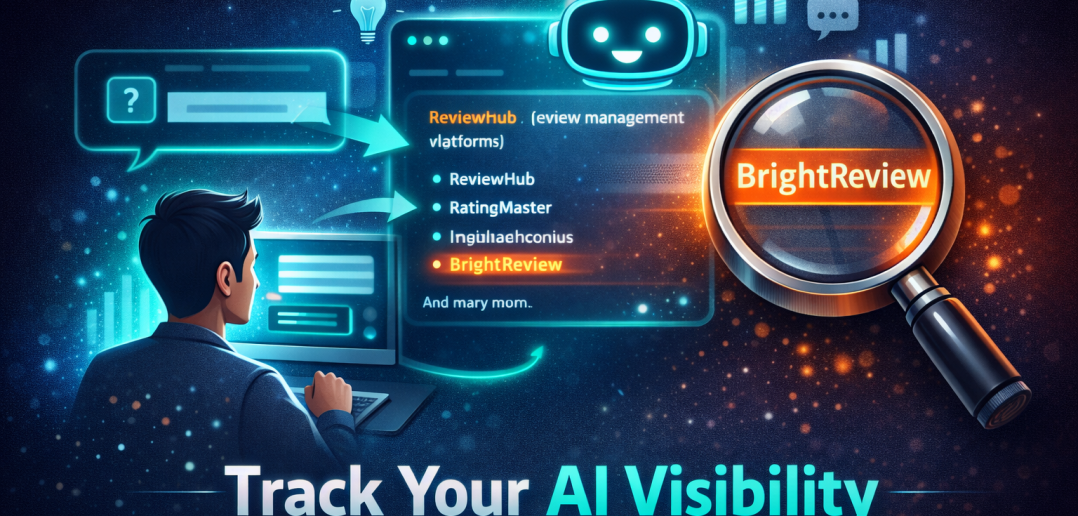
When someone asks ChatGPT a question like: “Best review management platforms for small businesses”the system generates an answer by synthesizing information from multiple sources. In many cases it recommends specific brands. These mentions influence perception because users often treat AI responses as trusted summaries of the web.
Monitoring those responses matters for three reasons.
First, it shows whether your brand exists in the AI ecosystem at all. If ChatGPT never references your company in relevant conversations, it indicates that your brand is missing from the sources AI relies on.
Second, it reveals how the AI describes your brand. The description may be accurate, outdated, or influenced by competitor content.
Third, it highlights competitor visibility. When AI consistently recommends certain companies, it signals that their content and authority are more strongly represented in the data sources used by generative systems.
Tracking this visibility has become part of what marketers now call AI search monitoring or Generative Engine Optimization (GEO).
The Challenge of Tracking ChatGPT Mentions
Unlike traditional search engines, ChatGPT does not provide a ranking report.
There is no dashboard showing:
- impressions
- keyword positions
- click-through rates
AI responses are dynamic. They vary depending on how a question is phrased, the context of the conversation, and the sources the model references.
Because of this, monitoring brand mentions usually involves a mix of manual testing and automated monitoring platforms that run prompts at scale and capture the responses.
Method 1: The Free Manual Method
The simplest way to track brand mentions in ChatGPT is to simulate how real users ask questions.
Start by identifying discovery-type prompts relevant to your business.
Examples might include:
“Best CRM tools for startups”
“Top personal injury law firms in California”
“Good review management platforms for local businesses”
Run these prompts in ChatGPT and review the generated answers carefully.
Look for three signals.
First, does the AI mention your brand at all?
Second, where does it appear in the answer?
Third, which competitors are being recommended instead?
Testing multiple variations of prompts is important because different phrasing can trigger different recommendations. Experts recommend running prompts across discovery, comparison, and educational queries to get a realistic picture of how your brand appears in AI conversations.
While this manual approach is free, it quickly becomes time-consuming if you need to track dozens of prompts regularly.
Method 2: Track Mentions Across Multiple AI Platforms
ChatGPT is only one part of the emerging AI search ecosystem.
Customers also ask questions on platforms like:
- Google AI Overviews
- Perplexity
- Gemini
- Claude
Many brands now track visibility across all of these systems because AI recommendations can vary widely depending on the platform. In fact, studies show that different AI tools often recommend completely different brands for the same query.
Testing prompts across multiple AI assistants gives a more accurate picture of your true AI visibility.
Method 3: Use AI Visibility Monitoring Tools
Manual testing works for experimentation, but serious monitoring requires automation.
Several new tools have emerged specifically to track brand mentions in AI search platforms. These tools run prompts at scale and capture the full responses so businesses can see when and how they are mentioned.
Examples include:
- Otterly
- GenRank
- Peec AI
- Siftly
- AI visibility features in platforms like Ahrefs and Semrush
These tools regularly test prompts across AI systems and track brand mentions, competitor recommendations, and the sources being cited in the responses.
The advantage of automated monitoring is consistency. Instead of manually checking prompts every week, the system continuously measures AI visibility over time.
What to Measure When Tracking AI Brand Mentions
Monitoring brand mentions in ChatGPT is not just about counting appearances.
The more valuable insights come from context.
For example, ask questions like: Is your brand recommended as a top option or just listed among alternatives?
Which competitors appear consistently in AI responses?
What sources seem to influence the AI’s recommendations?
Many AI visibility tools now measure metrics such as share of voice in AI answers, citation frequency, and the sources used by AI systems when generating responses.
These signals help marketers understand not just whether their brand appears, but why.
Turning Monitoring Into Strategy
Monitoring brand mentions is only the first step.
The real goal is improving visibility.
When a brand rarely appears in AI responses, it often means the underlying content ecosystem is weak. AI systems rely heavily on credible sources across the web, including authoritative articles, industry mentions, structured content, and strong brand signals.
Improving AI visibility often involves strengthening:
- authoritative content
- digital PR coverage
- entity recognition
- clear brand positioning across the web
Over time, as those signals improve, the likelihood of appearing in AI answers increases.
Final Thoughts
For years, marketers focused almost entirely on Google rankings.
That world is expanding.
Customers now ask AI tools for recommendations before visiting websites. When that happens, visibility shifts from blue links to generated answers.
Monitoring brand mentions in ChatGPT is the first step toward understanding this new layer of discovery. Once you know where your brand appears, how it is described, and which competitors dominate the conversation, you can begin shaping the signals that influence AI responses.
AI search is still evolving. But the brands that start measuring their presence today will have a clear advantage as this new discovery channel continues to grow.